
Five straightforward habits that support safer furnace operation through the heating season.
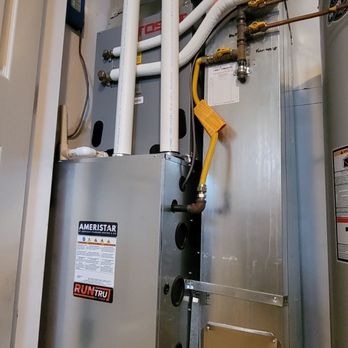
Representative High Demand Heating project photo. The customer address and exact project location are intentionally omitted for privacy.
1. Schedule regular professional maintenance
Annual maintenance is a practical baseline for most furnaces. A qualified technician can check operation, ignition, venting, safety controls, blower performance and other items appropriate for the model.
Book before sustained winter use when possible. Maintenance cannot prevent every failure, but it can reveal concerns before the furnace is working through its busiest season.
2. Keep the furnace area clear
Do not stack boxes, laundry or household items against the furnace or block access panels, vents and combustion-air openings. The technician needs safe access, and the equipment needs the clearances stated by its manufacturer and installation requirements.
Keep gasoline, paint, solvents and other flammable or corrosive products away from fuel-burning equipment. A mechanical room should not become general-purpose storage around the appliance.
3. Use the correct filter and maintain airflow
Check the furnace filter regularly and replace it when due with the correct dimensions and an appropriate type. A filter that is heavily loaded—or one that is too restrictive for the system—can reduce airflow and contribute to poor performance or shutdowns.
Keep supply registers and return grilles open and unobstructed. If airflow remains weak after a correct filter change, arrange diagnosis rather than modifying the equipment or ductwork yourself.
4. Maintain smoke and carbon-monoxide alarms
Install alarms in the locations required by local rules and the manufacturer's instructions. Test them and replace batteries or units according to those instructions. An alarm is a critical warning device, not a substitute for furnace and venting maintenance.
If a carbon-monoxide alarm sounds, move to fresh air and follow emergency instructions. Do not silence the alarm and continue operating the furnace until the situation has been assessed.
5. Treat new warning signs seriously
Gas odour, smoke, scorching, repeated breaker trips, water near electrical components, unusual flame, soot or persistent burning smells require prompt attention. Leave the area and follow utility or emergency guidance when gas or carbon monoxide may be involved.
Do not open the burner compartment, bypass a switch, adjust gas pressure or repeatedly reset a furnace that will not stay running. Record any visible code and call a qualified HVAC technician.