Understand the service
One system for heating and cooling
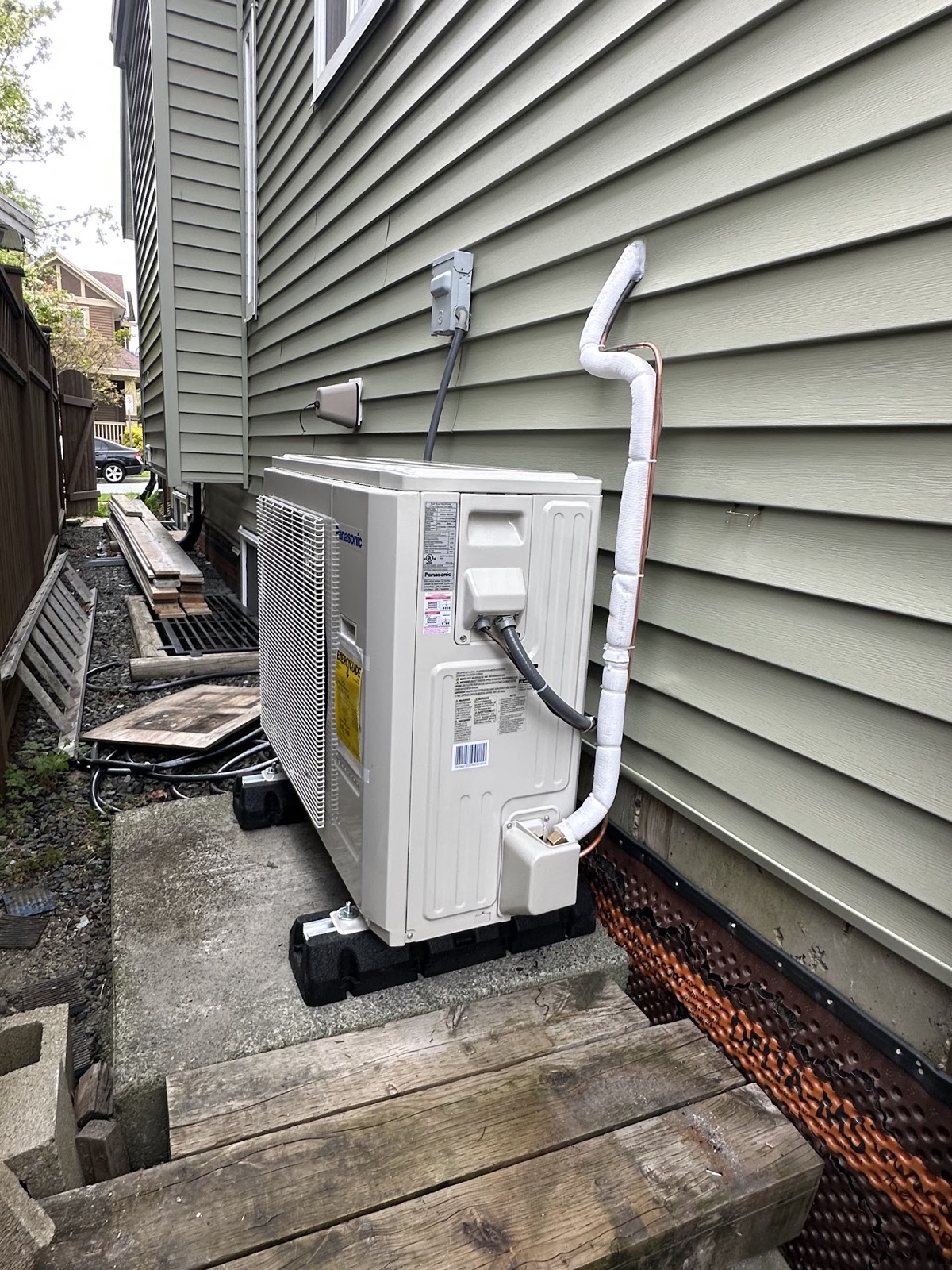
Heat pumps move heat between indoors and outdoors. Ducted systems use a central air handler, while ductless systems use one or more indoor units. Both depend on correct sizing, airflow, controls and outdoor-unit placement.
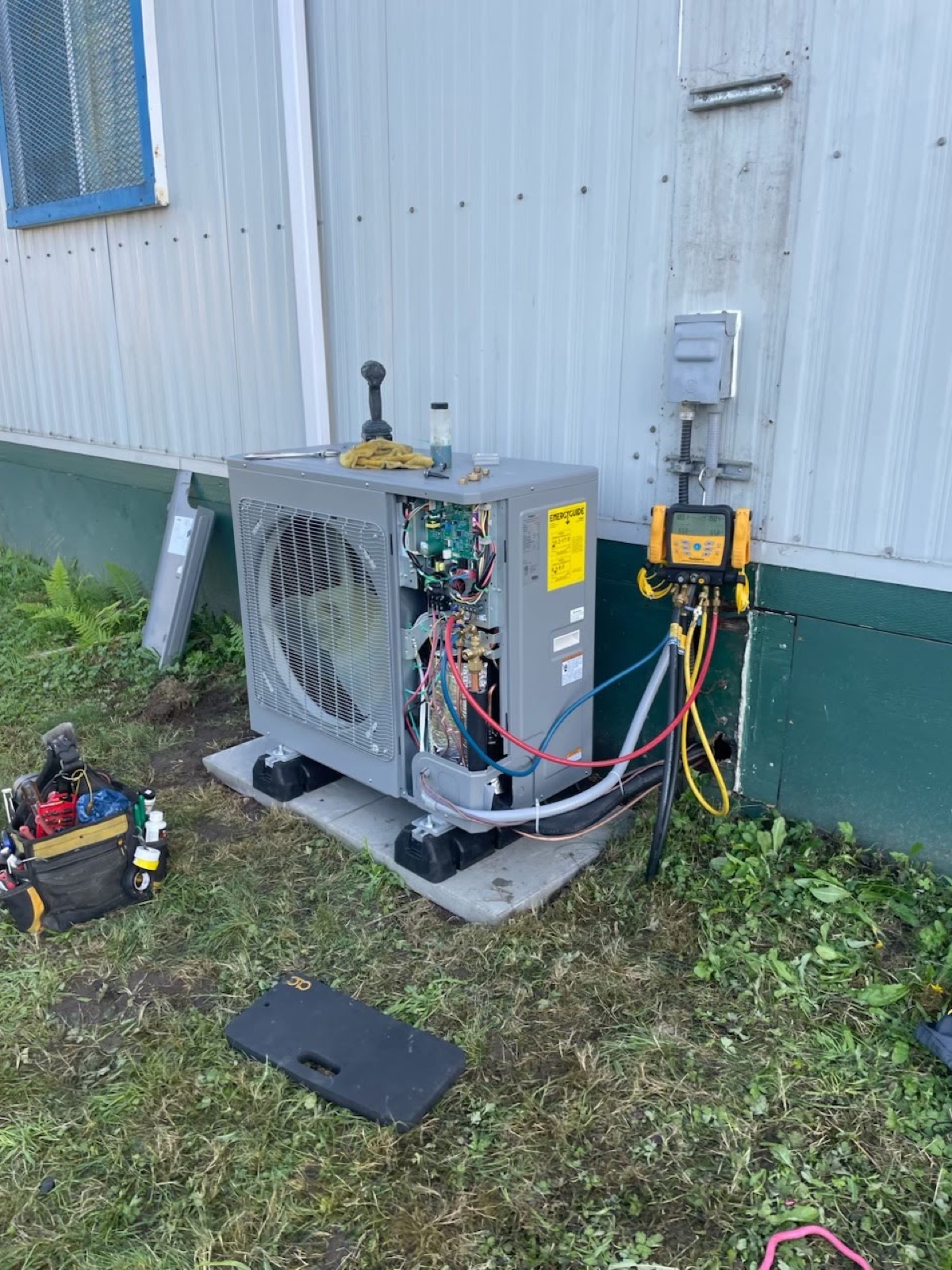
Service can involve seasonal maintenance, drainage and airflow concerns, error-code diagnosis, electrical or control repairs and replacement planning for the complete matched system.
Tell us what the system is doing
A useful service request starts with the equipment, exact symptoms and urgency. Share what changed, when it began, any visible error code and whether the system is still operating. That information is more useful than guessing which part has failed.
- Not heating or cooling
- Ice, leaks or unusual noise
- High energy use
- Planning an efficiency upgrade
Useful heat-pump checks before you call
- Confirm Heat or Cool mode and allow time after changing the thermostat
- Clean or replace accessible filters according to the equipment instructions
- Note any code on the thermostat or indoor unit
- Keep the outdoor unit clear of loose debris without opening or striking it
- Call for electrical odour, repeated breaker trips, heavy leakage or unsafe icing
Repair, maintenance and installation scope
Heat-pump diagnostics
Scope and recommendations are confirmed after reviewing the equipment, property and approved work.Seasonal maintenance
Scope and recommendations are confirmed after reviewing the equipment, property and approved work.System repair
Scope and recommendations are confirmed after reviewing the equipment, property and approved work.New installation and replacement
Scope and recommendations are confirmed after reviewing the equipment, property and approved work.What a heat-pump service visit can include
A heat pump is a complete heating-and-cooling system. Diagnosis may involve the thermostat, indoor airflow, outdoor unit, defrost behaviour, drainage, electrical controls and the way the system changes between heating and cooling.
- Thermostat mode, displayed codes and operating history
- Filter condition, indoor airflow and accessible coils
- Outdoor-unit operation, drainage and visible icing
- Controls, electrical components and refrigerant-system symptoms
Heat-pump maintenance, repair or replacement
Seasonal care may resolve routine cleanliness and drainage concerns. A specific failed component can make repair appropriate. Replacement planning should consider equipment age, refrigerant, repair history, home heat loss, distribution, electrical capacity and whether another heat source is part of the system.
What shapes a heat-pump installation
Capacity should reflect the home's heating and cooling loads, not only floor area. Duct condition, indoor-unit placement, sound, condensate, electrical capacity, backup heat and control strategy all matter.
For multi-zone ductless systems, room use and indoor-unit placement should be discussed before equipment is selected. A rebate should support a sound design, not replace it.