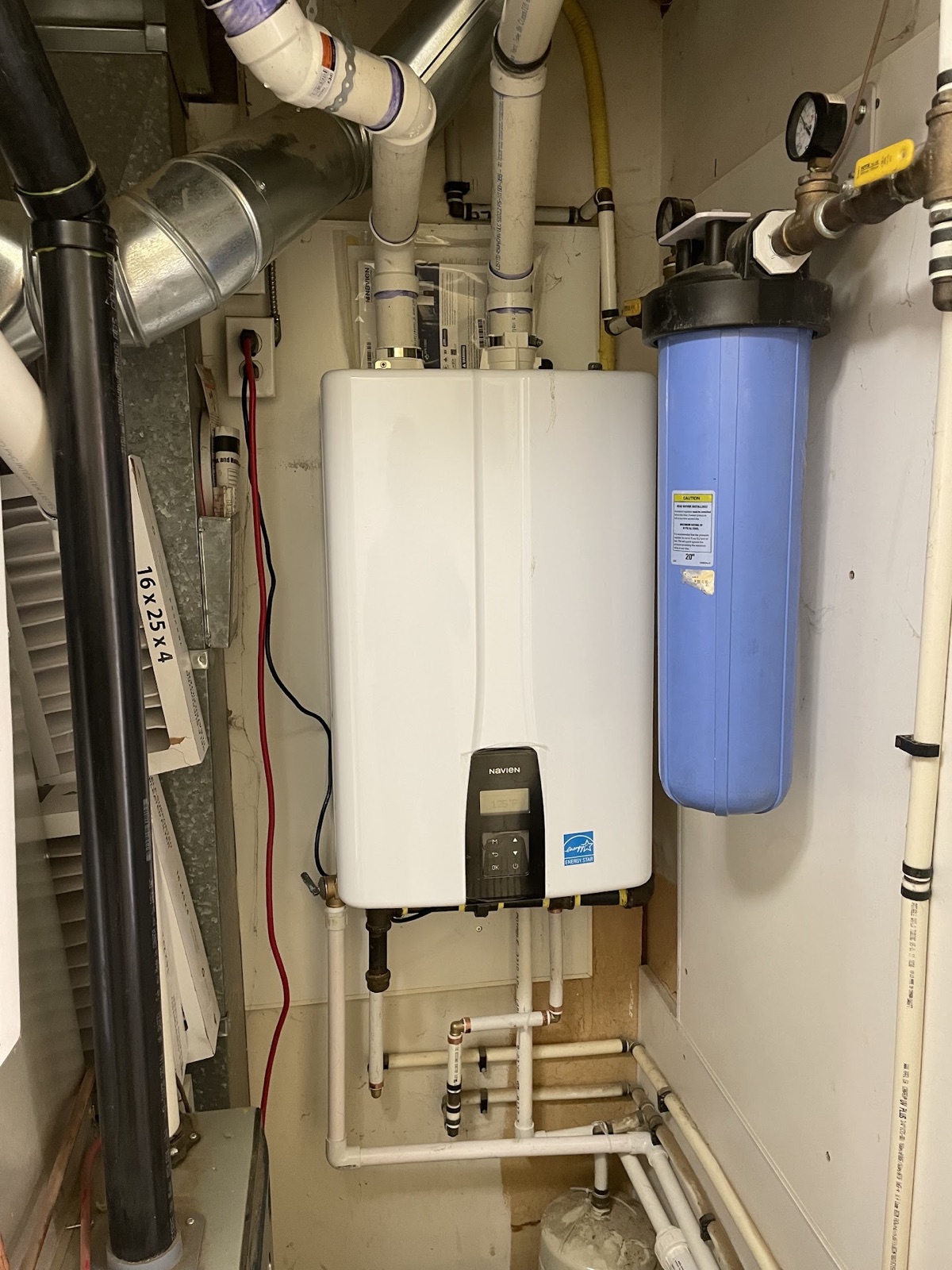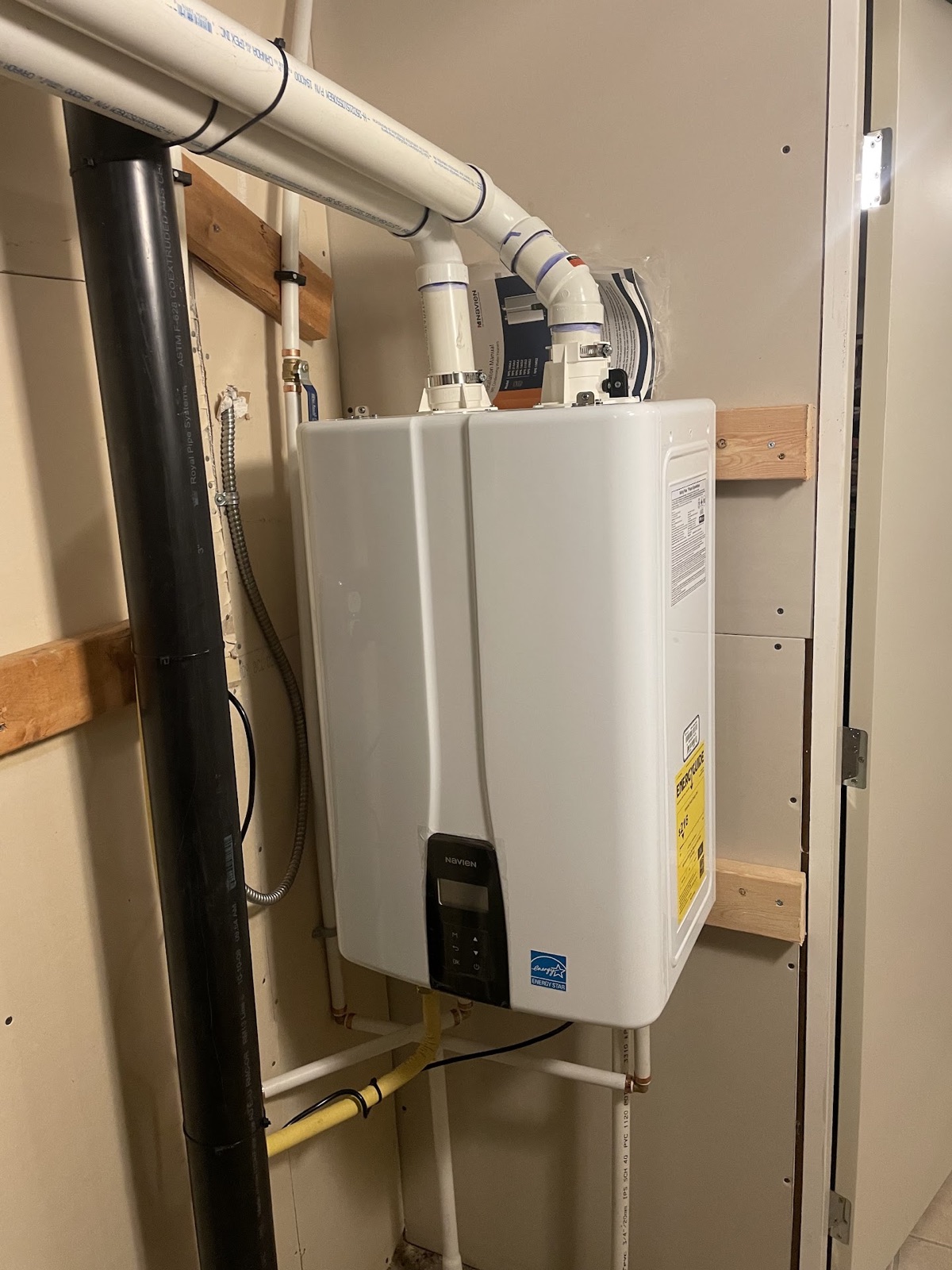
Understand the service
Tankless hot water is a complete system decision
An on-demand water heater activates when it senses flow and heats water as it passes through. Performance depends on temperature rise, flow, simultaneous fixtures, fuel, venting, drainage and maintenance—not simply the promise of continuous hot water.
We handle error-code diagnosis, maintenance, repair, like-for-like replacement and planning for storage-tank conversions.
Tell us what the system is doing
A useful service request starts with the equipment, exact symptoms and urgency. Share what changed, when it began, any visible error code and whether the system is still operating. That information is more useful than guessing which part has failed.
- No or inconsistent hot water
- Error codes
- Scale-related performance loss
- Planning a tankless conversion
Helpful checks for a tankless service request
- Record the full error code before resetting the unit
- Check whether every fixture or only one fixture is affected
- Note whether temperature changes when multiple fixtures run
- Provide the brand, model and maintenance history
- Keep the unit off and call for gas odour, leakage or electrical symptoms
Repair, maintenance and installation scope
Tankless diagnostics
Scope and recommendations are confirmed after reviewing the equipment, property and approved work.Maintenance and flushing
Scope and recommendations are confirmed after reviewing the equipment, property and approved work.System repair
Scope and recommendations are confirmed after reviewing the equipment, property and approved work.New installation or conversion
Scope and recommendations are confirmed after reviewing the equipment, property and approved work.Tankless service starts with the whole hot-water demand
An error code is useful, but it is only one part of the diagnosis. Water flow, inlet filters, scale, fuel supply, venting, condensate and simultaneous demand can all affect how an on-demand water heater performs.
- Displayed error codes and operating history
- Water flow, filters and scale-related symptoms
- Accessible venting, condensate and system connections
- Household demand and equipment capacity
Maintenance, repair or a new tankless system
Routine service helps manage filters and scale where applicable. Repair may resolve an isolated control or component fault. For a new installation or tank-to-tankless conversion, available utilities, venting and peak hot-water demand need to be reviewed before equipment is selected.
Before converting from a tank to tankless
A conversion may require gas-piping, electrical, venting, combustion-air, condensate and water-piping changes. Incoming water temperature and peak simultaneous use determine the capacity required.
A site assessment should confirm that the available utilities and installation space support the proposed unit before equipment is ordered.