Understand the service
Reliable hot water starts with the right diagnosis
No hot water, short hot-water duration, discoloured water and active leakage are different problems. The age and condition of the tank, controls, fuel or electrical supply, household demand and installation all influence the next step.
We assess repairable operating faults and provide replacement planning when the tank is leaking, deteriorated, undersized or no longer a sensible repair.
Tell us what the system is doing
A useful service request starts with the equipment, exact symptoms and urgency. Share what changed, when it began, any visible error code and whether the system is still operating. That information is more useful than guessing which part has failed.
- No hot water
- A leaking tank
- Discoloured or inconsistent water
- An aging tank nearing replacement
What to check around a hot-water tank
- Identify whether water is cold, lukewarm, inconsistent or depleted quickly
- Look for moisture from a safe distance and call for an active leak
- Note any code, unusual sound or change in water colour
- Keep the area clear so the tank and shutoffs can be accessed
- Do not open gas or electrical compartments or test unfamiliar safety devices
Repair, maintenance and installation scope
Hot-water diagnosis
Scope and recommendations are confirmed after reviewing the equipment, property and approved work.Tank repair where practical
Scope and recommendations are confirmed after reviewing the equipment, property and approved work.Replacement guidance
Scope and recommendations are confirmed after reviewing the equipment, property and approved work.New tank installation
Scope and recommendations are confirmed after reviewing the equipment, property and approved work.What a hot-water-tank visit can include
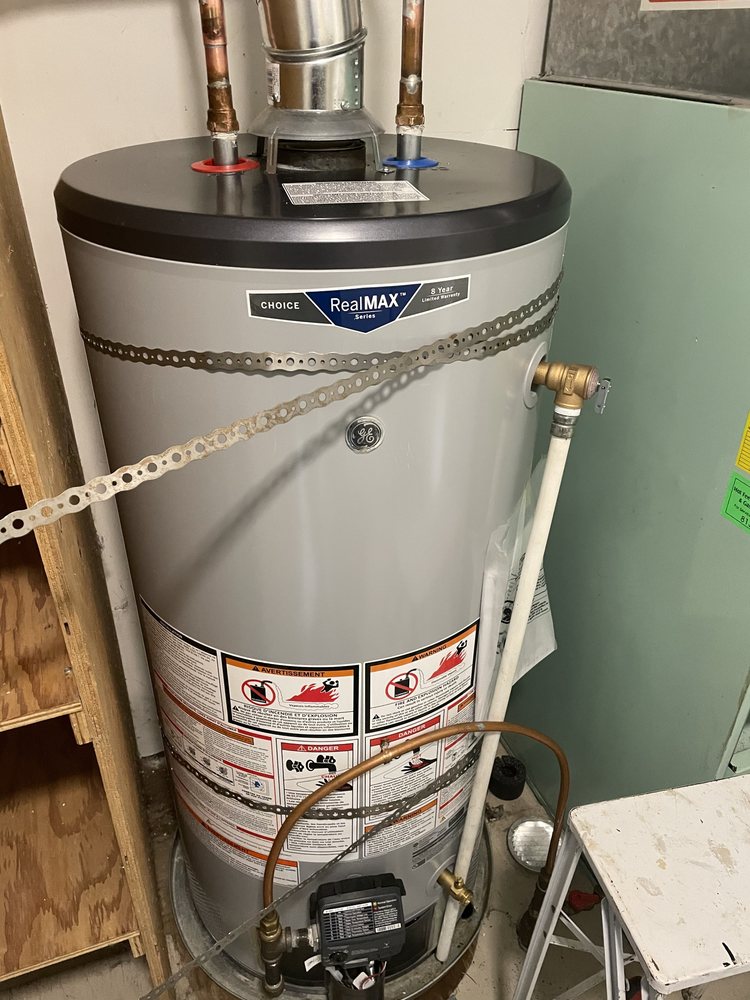
The service begins by separating a control or heating problem from a leaking or deteriorated tank. Fuel or electrical supply, venting, water connections, temperature, capacity and installation condition may all be relevant.
- Tank age, capacity, fuel and current symptoms
- Visible water connections, leakage and tank condition
- Controls, heating operation and accessible safety components
- Venting, drainage, clearances and replacement access
Repair the water heater or replace the tank?
A serviceable control or component can sometimes be repaired. An actively leaking tank usually requires replacement rather than patching. Capacity, household demand, available space and utilities should be reviewed before selecting the new equipment.
Choosing a replacement tank
Capacity, recovery, fuel, venting, physical dimensions, drain access and household demand should be considered together. A tank that fits the opening may still be the wrong match for the household.
Installation scope can include piping, venting, drainage, electrical or gas work and safe removal of the old tank. Those details should be clear in the estimate.