
How whole-home furnace heat differs from the focused comfort and appearance of a gas fireplace.
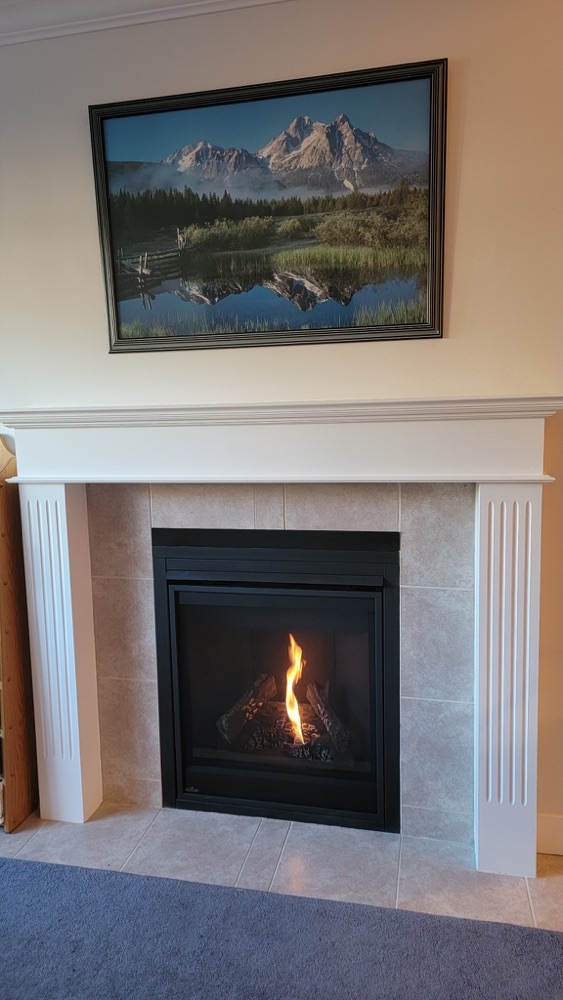
Representative High Demand Heating project photo. The customer address and exact project location are intentionally omitted for privacy.
A furnace is designed for whole-home distribution
A forced-air furnace heats air and uses ductwork to distribute it through the home. When the equipment and ducts are properly sized and maintained, it can provide consistent heat to bedrooms, bathrooms and other spaces that are far from the mechanical room.
The final comfort depends on more than the furnace rating. Duct leakage, return-air design, insulation and room balance all influence how much heat reaches each area.
A gas fireplace provides focused room comfort
A gas fireplace primarily heats the room or open area around it. It can be useful for taking the chill off a living space without raising the temperature throughout the home, and it adds a visible design feature that a furnace does not.
Heat may not move effectively into closed bedrooms, lower levels or plumbing spaces. For that reason, a fireplace is not automatically a substitute for a central system, especially during colder weather or when the building depends on distributed heat for freeze protection.
Compare efficiency in context
Manufacturer efficiency information helps, but it does not answer every household question. A high-efficiency furnace serving the entire house and a fireplace heating one occupied room are doing different jobs. Runtime, setpoint, home heat loss and distribution all affect actual fuel use.
If your goal is whole-home comfort, assess the furnace and ducts. If your goal is supplemental heat and ambience in one area, assess the fireplace's output, installation and controls.
Many homes benefit from both
A common arrangement is a furnace as the primary heat source and a gas fireplace for focused comfort. Each appliance still needs proper venting, clearances and regular service. A fireplace with soot, delayed ignition, unusual flame or persistent odour should be turned off and inspected.
High Demand Heating services both gas furnaces and gas fireplaces. We can help identify whether a comfort concern belongs to the appliance, the distribution system or the building itself.